
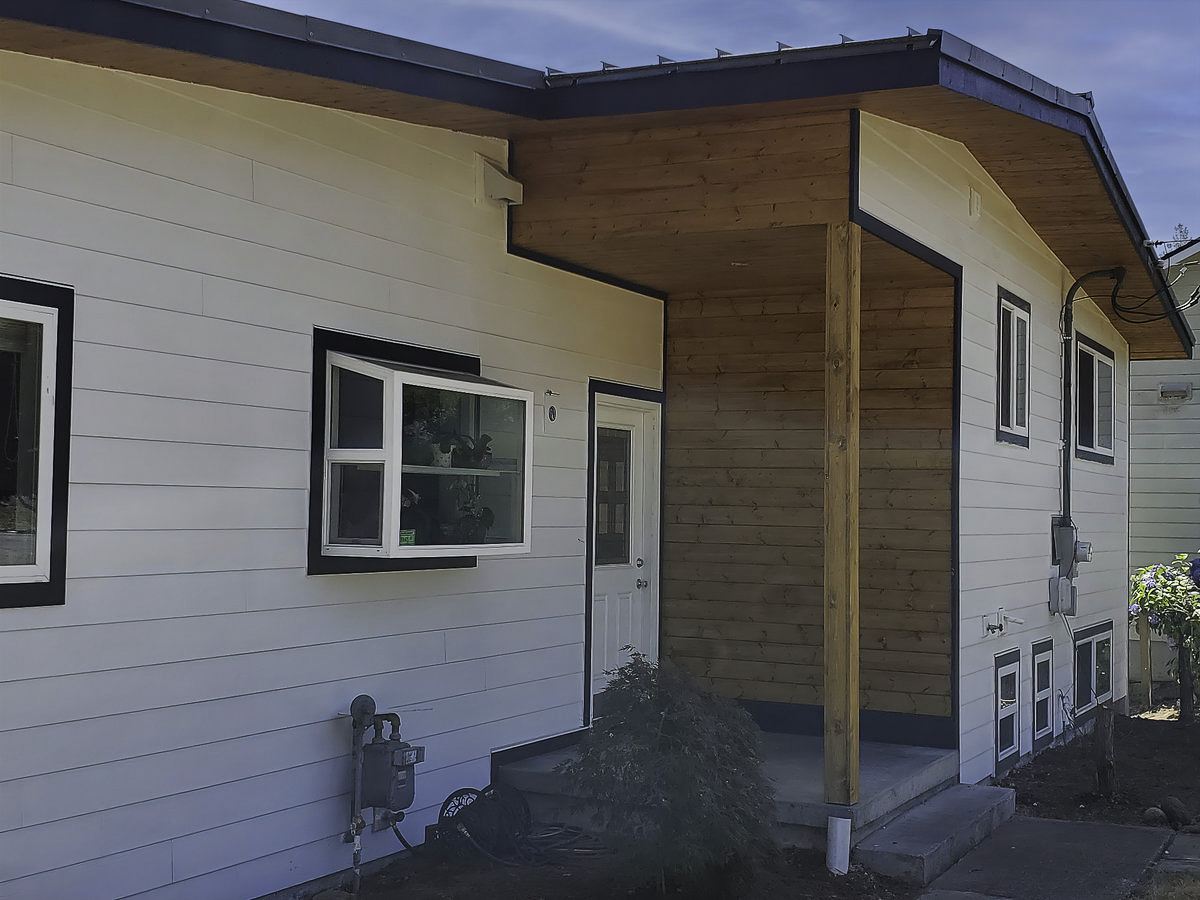
Why HardiePlank estimates vary so much
A simple one-story wall with few windows is very different from a tall home with gables, dormers, decks, multiple trim transitions, and older water damage. Fiber cement installation rewards careful layout and detailing, so labor and prep matter as much as the board itself.
Prep protects the investment
If old siding failed because of missing flashing, trapped water, or soft trim, new fiber cement should not simply cover the same problem. The estimate should describe how the wall will be prepared and how hidden damage will be handled.
Trim and style choices
HardiePlank lap siding can be paired with Hardie shingles, board and batten, Hardie panel sections, belly bands, and clean window trim. Those choices affect the final look and the labor required to install it well.
Paint and finish
Some homeowners choose prefinished James Hardie products, while others prefer field painting. Either approach should be planned around product requirements, caulking strategy, and long-term maintenance.
What a good Hardie scope should spell out
A strong fiber cement proposal should list the siding profile, exposure, trim type, window and door trim approach, fastener assumptions, flashing scope, weather barrier, caulking or joint treatment, paint or finish plan, and cleanup. It should also explain what happens if rot or damaged sheathing is found after the old siding comes off.
That detail matters because HardiePlank can look excellent when the layout is deliberate. Window trim should feel balanced, corner boards should be sized correctly, and transitions between lap siding, shingles, panels, and belly bands should look intentional rather than patched together.
Where homeowners should not cut corners
For Seattle-area homes, the risky areas are usually not the middle of a simple wall. They are the lower clearances, window heads, deck ledgers, roof-to-wall transitions, penetrations, and shaded elevations that stay wet longer. If those areas are rushed, the project can look new while still carrying old moisture risk.
Is James Hardie worth it for Seattle-area homes?
For many homeowners, yes. Fiber cement can provide a refined appearance, strong durability, and good long-term value when installed correctly. It is especially worth considering when the goal is a long-lasting exterior upgrade rather than the lowest upfront price.
Homeowners can review product information from James Hardie, then use a local estimate to understand what the actual home needs. Breeze Siding can help compare a Hardie scope against vinyl, cedar accents, panel sections, and repair needs so the final plan fits the home and the budget.
How to use this page before meeting a contractor
Bring the conversation back to scope, not only product. Ask whether the bid includes tear-off, trim replacement, wall prep, fastener and clearance details, flashing, paint, disposal, and cleanup. If two estimates are far apart, compare those line items before assuming one contractor is simply cheaper. The clearest Hardie estimate is the one that tells you what the finished exterior will look like and how the wall will be protected before the siding goes on.