
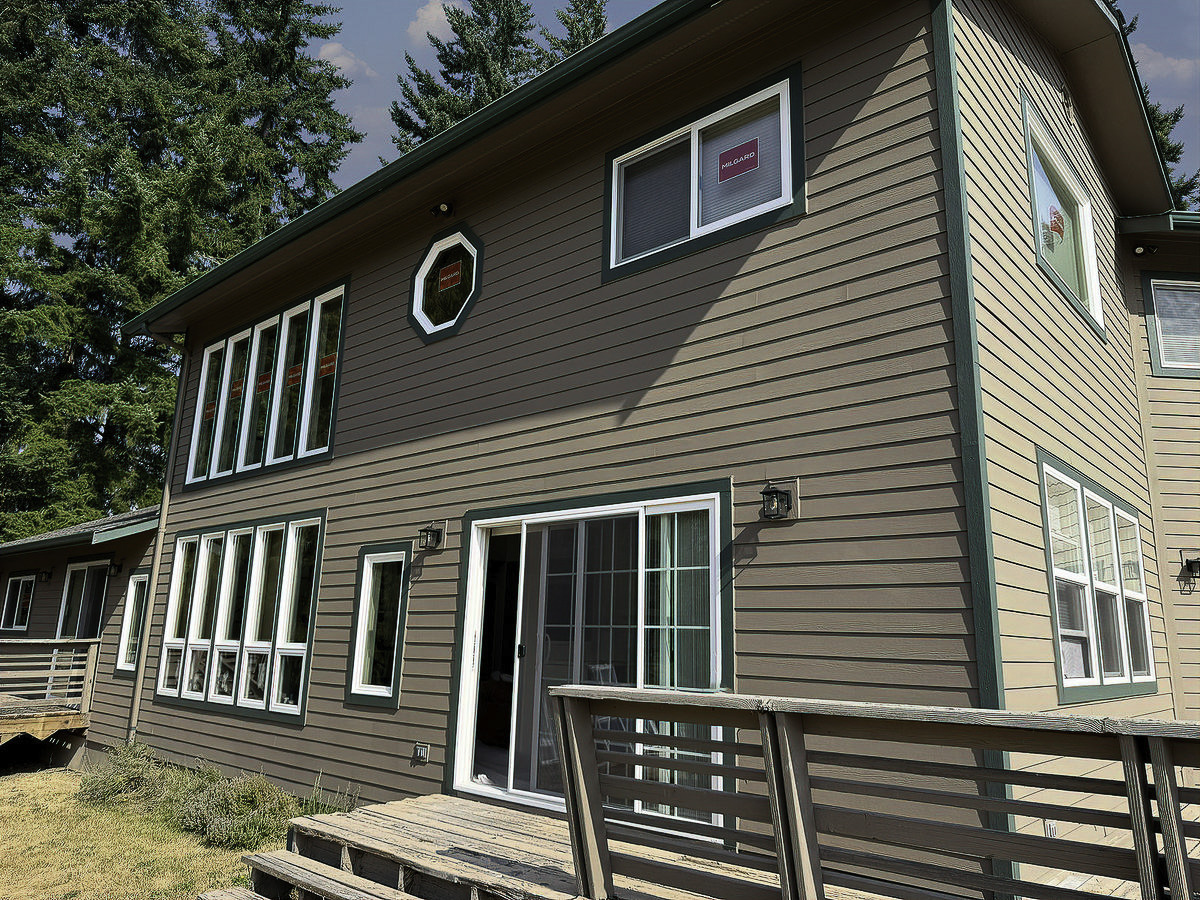
Why house wrap matters in Seattle and Tacoma
Siding is the first line of defense, not the only one. Wind-driven rain, seams, penetrations, and trim joints can allow some water behind the finished surface. The wall needs a planned way to manage that moisture.
Flashing and house wrap work together
Window flashing, head flashing, sill details, roof-to-wall flashing, and wall penetrations should be integrated with the weather barrier. If those pieces fight each other, water can be directed into the wall instead of out of it.
Rainscreen thinking
Some projects benefit from a rainscreen siding system or drainage gap behind the siding. This can help walls dry more effectively, especially in wet or shaded conditions. The right approach depends on the product, wall condition, code requirements, and project scope.
Do not wrap over damage
If sheathing, trim, or framing is soft, it should be reviewed and repaired before the new weather barrier and siding go on. Covering damage does not make it disappear.
What homeowners should ask about the weather barrier
Ask how seams will be lapped, how windows will be integrated, how wall penetrations will be sealed, and how water will be directed out at the bottom of the wall. These are not flashy questions, but they are the questions that help siding last. A beautiful exterior can still fail if the wall behind it has no reliable drainage path.
Seattle-area homes are especially sensitive to this because many walls stay damp for long stretches of the year. North-facing walls, shaded side yards, tight homes between neighboring buildings, and deck-adjacent walls can dry slowly. That makes the weather-resistive barrier and flashing strategy more important.
House wrap is not a rot repair
If the old siding comes off and the sheathing is soft, stained, or delaminated, new wrap should not be treated as the fix. The damaged material needs to be evaluated first. Once the wall is sound, the new weather barrier can do its job.
Where small details matter most
- Window heads, lower corners, and sill pans.
- Electrical blocks, lights, hose bibs, and vents.
- Deck ledgers and rail connections.
- Roof-to-wall intersections and lower wall clearances.
Homeowners do not need to know every technical layer, but they should know enough to ask good questions. If a contractor cannot explain how water exits the wall, how windows are integrated, or how old damage is handled, the estimate may be too vague. Clear weather-barrier language is a sign that the project is being treated as an exterior system instead of a surface refresh.
How Breeze Siding scopes weather protection
We review the existing siding, likely moisture paths, windows, trim, and repair areas. Then the siding scope can include the right combination of weather barrier, flashing, trim, and finish details.
For general moisture-management concepts, homeowners can review the Building America Solution Center.