
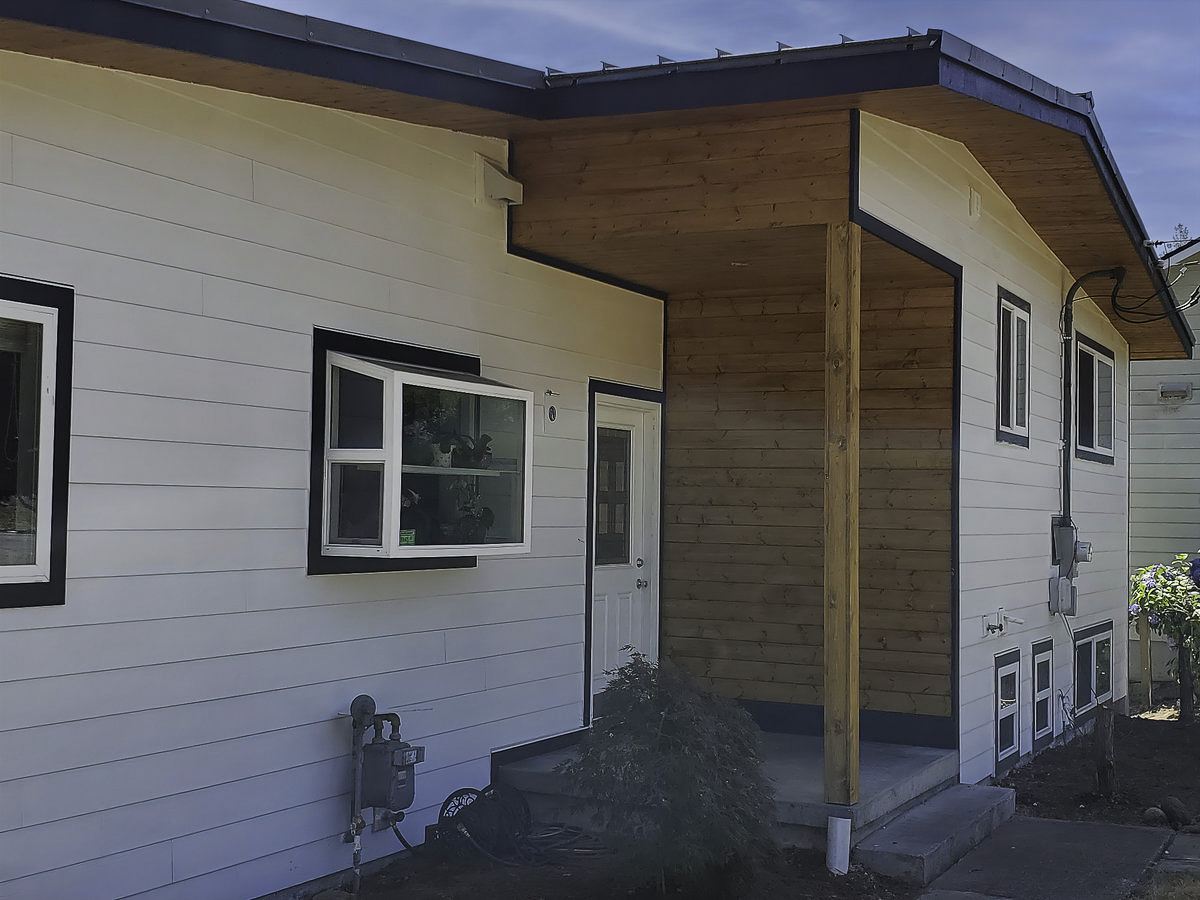
Keep water moving away
Rot often starts where water sits, enters unsealed end grain, or gets trapped behind trim. Proper flashing, clearances, caulk joints, paint maintenance, and drainage paths help reduce that risk. The goal is not to make a wall depend on sealant alone, but to give water a planned path out.
Fix small failures early
A small paint crack, open joint, or soft trim corner can become a larger repair if water keeps cycling into the same area. Early siding and trim repairs usually protect more of the wall and keep the project from turning into a larger tear-off.
Know when prevention turns into repair
If wood feels soft, siding is buckling, trim is swollen, or staining keeps returning, the wall may need to be opened and inspected. Covering rot with caulk or paint does not solve the source of the moisture.
Common rot-prone spots on Northwest homes
Window lower corners, belly bands, deck ledger areas, bottom siding courses, and shaded side walls deserve extra attention. These areas often see more water, slower drying, or more complicated transitions. That is why a siding estimate should include more than a simple material conversation.
Older Seattle, Tacoma, and Pierce County homes may also have layered remodel history. A newer window, older siding, previous paint work, and past repairs can all meet in the same wall. If those details were not integrated well, water may find the weak point.
Maintenance that helps
- Keep paint and caulk joints monitored, especially at trim and penetrations.
- Keep soil, mulch, and stored items away from lower siding.
- Watch gutters, downspouts, and roof runoff near siding.
- Trim plants that hold moisture against the wall.
- Take photos when stains or soft spots appear so changes are easy to track.
When siding replacement is the better prevention
If rot is showing up in multiple areas, the exterior may need a larger reset. Siding replacement can create the chance to repair damaged material, install a better weather barrier, correct flashing, and use siding and trim products that fit Northwest conditions.
Replacement also helps when the old exterior has repeated maintenance problems. If paint keeps peeling, siding keeps swelling, or window trim keeps opening up, the wall may need new materials and better detailing instead of another short-term patch.
How Breeze Siding helps reduce repeat rot
Breeze Siding reviews the siding, trim, window details, flashing, paint condition, and drainage concerns together. The finished work should look better, but it should also reduce the conditions that caused the problem in the first place.
During an estimate, helpful photos include closeups of soft trim, wider wall shots, window corners, lower siding, deck connections, and any stains that return after rain. Those details make the first conversation more useful and help us separate urgent repair items from optional exterior upgrades.